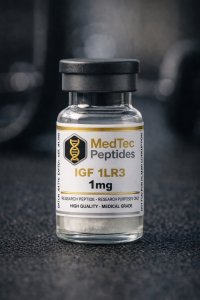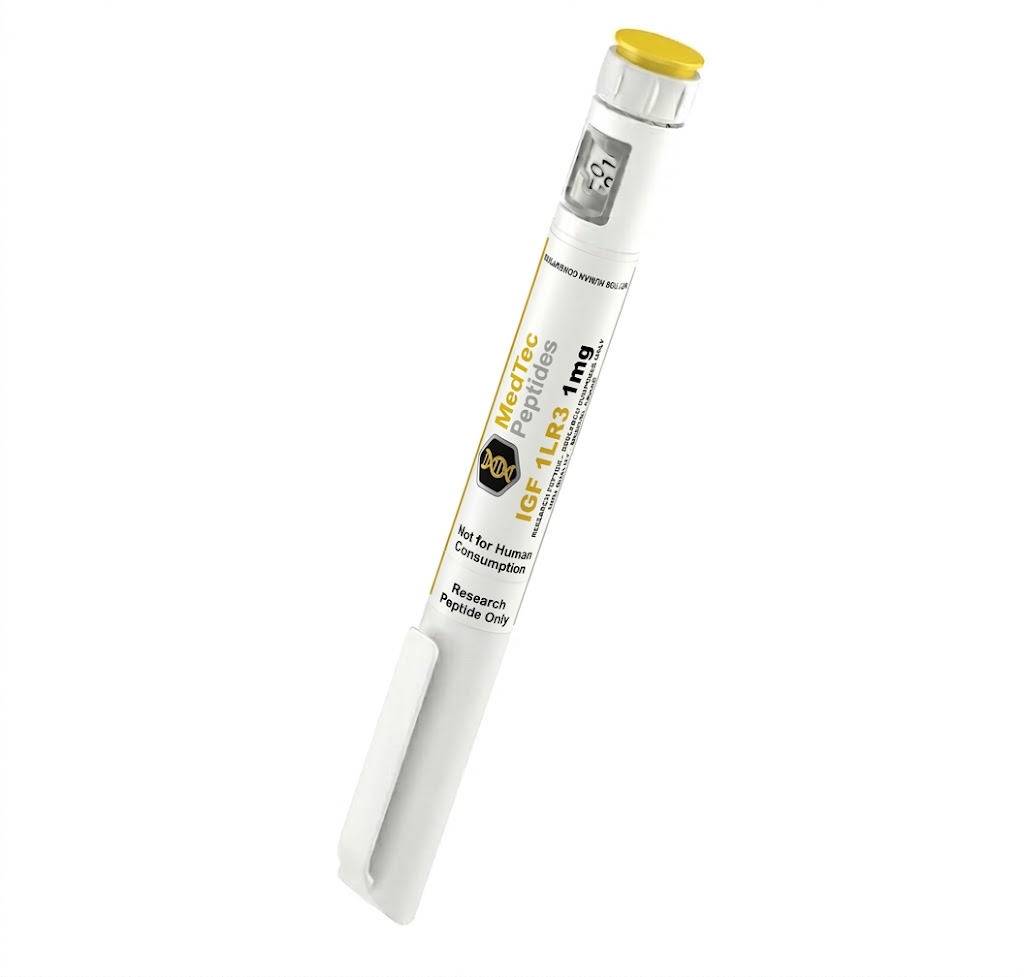
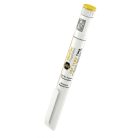
IGF 1LR3 1mg
- Estimated Delivery : Up to 4 business days
- Free Shipping: On all orders over £150
Research Use Only
These products are for laboratory research only and not intended for medical use. They are not FDA-approved to diagnose, treat, cure, or prevent any disease. By purchasing, you certify they will be used solely for research and not for human or animal consumption.
Description:
IGF-1 LR3 is a recombinant synthetic peptide, an analogue of human insulin-like growth factor 1 (IGF-1). It consists of 83 amino acids, imitating its action with modifications that improve metabolic stability. Its main property is the potential effect on muscle growth and significant loss of fat deposits. In addition, the peptide may accelerate muscle recovery and show cognitive benefits such as improving memory and mood stabilization. Due to these functions, it is most widely used in the world of sports. It can also help in treating conditions characterized by a lack of growth hormone (as an analogue of the natural compound, it also releases growth factor). Activation of protein synthesis, improved cellular communication, and better glucose transport are just some of the beneficial effects that IGF-1 LR3 has on the body.
IGF-1 LR3 is an improved version and analogue of human insulin-like growth factor 1 (IGF-1). This natural compound is one of the main growth factors produced in the liver. When levels are low, the condition of dwarfism can develop. Therefore, there is an assumption that this peptide can help treat such a disease. One of the main properties is the glucose transport regulation and the activation of protein synthesis.
These effects are crucial for further muscle growth and increased strength because by regulating glycemia, the muscles are enriched with glycogen, and the increase in protein synthesis ensures volume gain. Additional secretion of growth hormone not only contributes to muscle growth but also improves cell communication through activated biochemical pathways essential for further linear development. IGF-1 LR3 may also be able to regulate the metabolism of various compounds and thus ensure that tissues receive a greater amount of nutrients, using them better. Due to its characteristics on muscle tissue, the peptide is most widely used in sports and bodybuilding.
In addition to this basic characteristic, the peptide can facilitate recovery after training and preparing the body for the next load. It works by increasing the growth hormone level, which accelerates the process of tissue growth and regeneration. Along with this nutritional supplement, it is also necessary to ensure proper sleep, because that is when the body performs all metabolic processes and restores the cell structures.
Used properly, this peptide can lead to improved cognitive performance. IGF-1 LR-3 may be particularly important as part of therapy in neurological conditions resulting from a lack of growth hormone. Additional synthesis can provide improved memory (in certain forms of dementia), increased concentration (ensuring attention), neuroprotective effects (in neurodegenerative diseases), and stabilization of mood.
The difference in chemical structure between this peptide and the original IGF-1 is the substitution of arginine at the third position, which significantly modifies the compound. It is continuously retained in the body, so its administration is limited to one or two subcutaneous injections. This property is provided by modifying the original protein binding capacity, which previously limited its retention in the body. The peptide is stable and provides its effects primarily by binding to muscle receptors.
References:
- Anderson, L. J., Tamayose, J. M., & Garcia, J. M. (2018). Use of growth hormone, IGF-I, and insulin for anabolic purpose: Pharmacological basis, methods of detection, and adverse effects. Molecular and Cellular Endocrinology, 464, 65–74. https://www.ncbi.nlm.nih.gov/pmc/articles/PMC5723243/
- Yakar, S., & Adamo, M. L. (2012). Insulin-like growth factor 1 physiology: lessons from mouse models. Endocrinology and Metabolism Clinics of North America, 41(2), 231–247. https://www.ncbi.nlm.nih.gov/pmc/articles/PMC3352546/
- Ohlsson, C., Mohan, S., Sjögren, K., Tivesten, Å., Isgaard, J., Isaksson, O., Jansson, J. O., & Svensson, J. (2009). The role of liver-derived insulin-like growth factor-I. Endocrine Reviews, 30(5), 494–535. https://www.ncbi.nlm.nih.gov/pmc/articles/PMC2754350/
- LeRoith, D., & Yakar, S. (2007). Mechanisms of disease: metabolic effects of growth hormone and insulin-like growth factor 1. Nature Clinical Practice Endocrinology & Metabolism, 3(3), 302–310. https://pubmed.ncbi.nlm.nih.gov/17315038/
- Clemmons, D. R. (2007). Modifying IGF1 activity: an approach to treat endocrine disorders, atherosclerosis and cancer. Nature Reviews Drug Discovery, 6(10), 821–833. https://pubmed.ncbi.nlm.nih.gov/17906643/
| Peptide Option | 3ml Pen Option, 3ml Vial Option |
|---|
Related products
-

Kisspeptin 10 mg
Price range: £45 through £79 -

BPC-157 & TB-500 blend 10mg/10mg
Price range: £55 through £89 -

SLU PP 332 5mg
Price range: £55 through £89 -
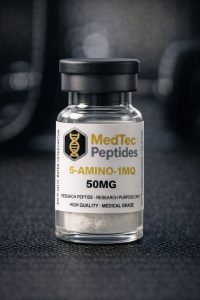
5 Amino 1MQ 50mg
Price range: £195 through £229 -

Bacteriostatic Water 3ml
£4.50 -

SS-31 10mg
Price range: £45 through £79